
Can Love Survive in a Marriage?
Sep 29, 2026
Here is something I didn’t expect after my divorce: I learned I am actually a big lover girl. I love romance. I love Bridgerton. I love being woo’ed. I am a big romantic.

The best coupling in this show and you can’t convince me otherwise.
Once the rules of marriage fell away, I realized how infinite love can feel. And I started to wonder if the problem was never loving a man (I mean, I guess that’s still up for debate—kidding! Please keep reading). Maybe the problem is what we ask love to contort itself into when we get married.
So, I’m asking a question I think a lot of women quietly carry: can love survive marriage?
Let me be more specific. Can love Survive the SCRIPT of marriage? Not the idea of commitment but the script, the unspoken rules about who we’re supposed to become once we say “I do.”
I’m writing this as a couple’s counselor, as a soon-to-be divorced woman, and as someone who still believes in romantic love. I don’t have a neat answer. I’m still processing this question, and I’m doing this in real time for authenticity and to invite you, my little community, to think it through with me.
Marriage wasn’t built for love
For most of history, marriage wasn’t about love. Historian Stephanie Coontz, in Marriage, a History, shows that marriage mostly served practical ends: forming alliances between families, securing property, and passing down inheritance. Marrying for love is a fairly recent Western ideal.

That practical system was often built on women’s bodies and labor. Tracing legitimate heirs mattered for passing down property. Under English common law, the doctrine of coverture folded a wife’s legal identity into her husband’s. She couldn’t own property or sign contracts in her own name. Romance, when it existed, often happened outside the marriage, and that freedom was far more available to men (boo, patriarchy).
But here’s what matters: patriarchal marriage isn’t the only model humans have ever had. Marriage has looked very different across cultures. In the precolonial Philippines, historian William Henry Scott documented that women could own property and divorce. The version of marriage many of us inherited was shaped by colonization and patriarchy. It was imposed, not natural. And what was built can be rebuilt.
What the research tells us about women in marriage
Women are the ones leaving. Sociologist Michael Rosenfeld found that women initiate about 69% of divorces in heterosexual marriages. But in non-marital breakups, men and women end things at roughly equal rates. That points to something about the institution of marriage, not just relationships.
The load is still uneven. Women still carry more of the housework, childcare, and mental load, even in dual-earner homes. A 2026 study found that women’s relationship and sexual satisfaction went up when the mental load was shared. Men’s satisfaction went up when their female partners carried more of it. The same arrangement that works for him can quietly cost her.
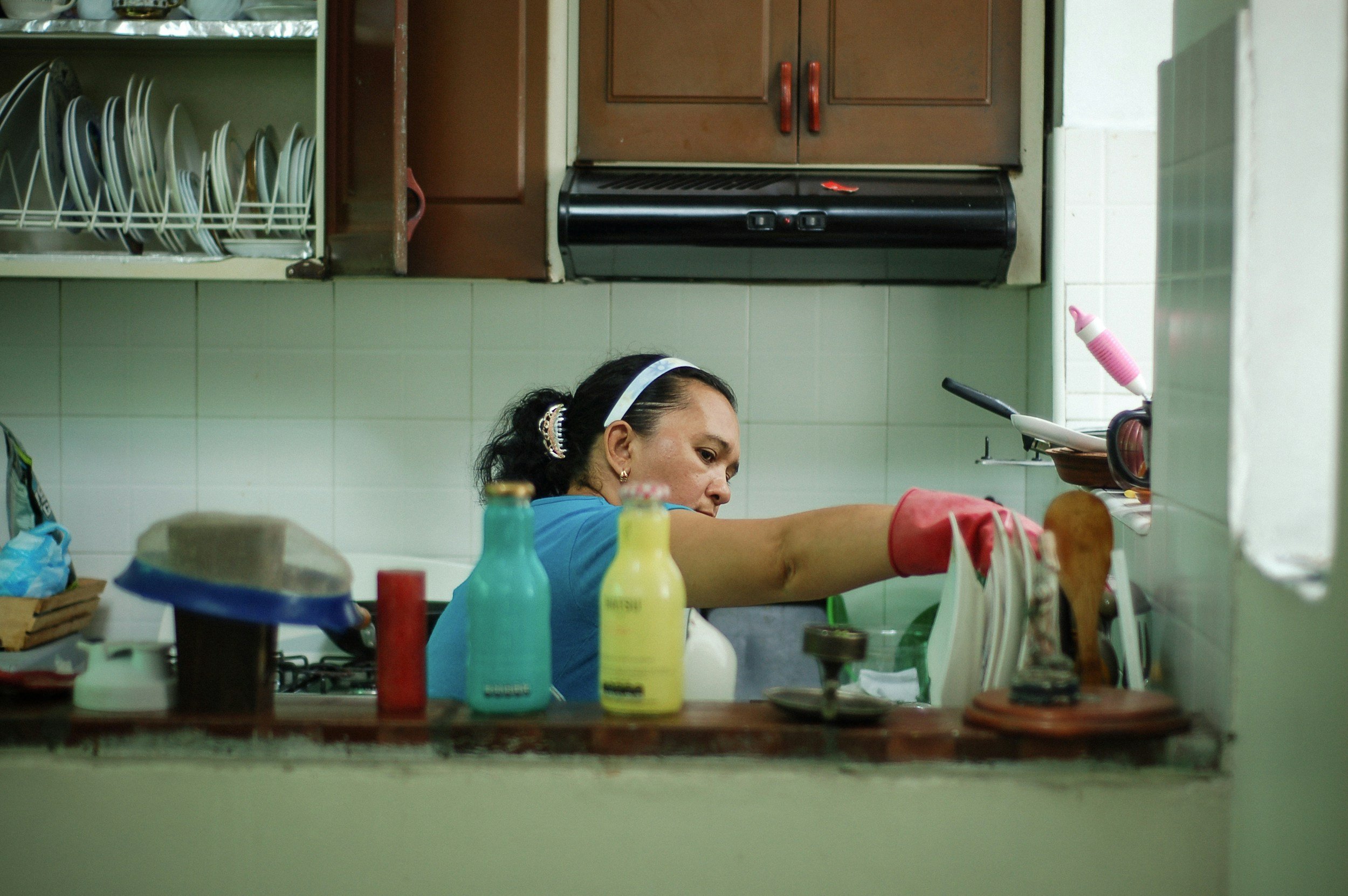
Sharing care makes relationships better. Sociologist Daniel Carlson found that couples had the lowest-quality relationships and sex lives when women handled at least 60% of childcare. Couples who shared parenting equally reported the highest satisfaction across the board. Older research suggested equality hurt couples’ sex lives, but when Carlson re-examined it with newer data, sexual frequency increased only among egalitarian couples.
“Satisfied” doesn’t always mean fulfilled. Research consistently shows that perceived fairness matters more than exact equality. Studies have found that women with fewer economic resources and fewer alternatives to marriage are more likely to see an unequal division as fair. HOWEVER, Women also judge fairness partly by comparing themselves to others. So sometimes “I’m fine” really means “this is normal where I’m standing,” not, “this is good.”
Feeling valued matters. Research on “mattering” found that how important wives believe they are to their husbands shapes how fair their marriage feels. Men’s communication quality also helps explain the link between housework and women’s satisfaction. Women want to be seen, not just helped.

A myth worth retiring. You may have seen the viral claim that single women without children are the happiest group. That claim came from a 2019 book by economist Paul Dolan, and he later acknowledged it was based on misread survey data. The divorce initiation numbers make a stronger and truer case.
One honest note: most of this research shows correlations, not proof of cause, and much of it focuses on heterosexual couples in specific countries. Still worth considering that the pattern is consistent.
Quiet quitting and the model we inherited
You may have seen the phrase “quiet quitting” applied to marriage. It took off after a viral piece in The Cut by Monica Corcoran Harel about women who emotionally check out of their marriages while staying married in name. Therapists describe it as something that often happens after a woman has poured years of effort into the relationship and her bids for connection kept going unanswered.
To be clear, “quiet quitting” is a cultural term, not a formal research category. But it names something real, and the divorce data sits right underneath it. Many women have left long before they ever say a word.
Some people call quiet quitting empowered. I’m not so sure. I know for me, it looks less like a strategy and more like depletion. I was one of the women who have made themselves small for so long we aren’t sure what’s left.
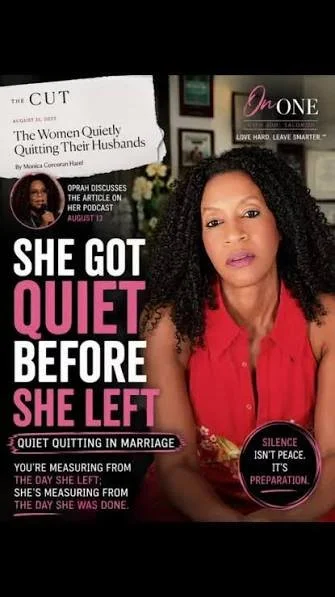
So why do we keep ending up here? Part of the answer is what we were taught love looks like.
Philosopher Kate Manne, in Entitled: How Male Privilege Hurts Women, argues that men are often raised to feel owed women’s care, attention, and emotional labor. And women are raised to give it. Many of us watched our mothers center everyone else’s needs. Many men watched their mothers do the same thing, and learned to expect it.

The research backs this up. One long-term study linked how parents split housework to how their children split it about ten years later in their own relationships. Traditional patterns passed directly to sons, who did less housework. And they passed indirectly to daughters, through choosing partners who resembled their fathers.
The marriage scripts that make us smaller
Modern marriage comes with a set of unspoken rules. They’re sold as what love looks like. Often, they’re what keeps people in dynamics that don’t work.
“Married couples share a bed.” Even if it ruins someone’s sleep. Rest is a basic need, and sleeping apart doesn’t mean loving less.
“The spark always dies.” We’ve normalized the idea that marriage kills excitement. But the research tells a more hopeful story. Psychologists Bianca Acevedo and Arthur Aron found that romantic love, meaning intensity, interest, and sexual desire, can last in long-term marriages and is linked to higher satisfaction and well-being. In one U.S. sample, 40% of people married more than ten years said they were “very intensely in love.”
What usually fades isn’t love. It’s the obsession of early romance: the uncertainty, the preoccupation, the anxiety. Acevedo and Aron suggest we’ve confused the two. In long-term marriages, obsession is actually linked to lower satisfaction. It sounds like the “spark” we’re told to mourn was partly anxiety. Lasting love can feel calmer and still be intense. Brain imaging backs this up: people married an average of 21 years who said they were intensely in love showed activity in the same reward areas as new lovers, with more calm.
What goes along with lasting love? Thinking warmly about your partner, affection and sex, and doing new and challenging things together. Aron’s broader theory, the self-expansion model, says love thrives when a relationship helps each person grow and become more. That’s the opposite of making yourself smaller.
These studies show connections, not proof, and they mostly involve happily married volunteers. But it shows us that lasting desire is possible, and that it may grow best in a marriage where no one has to shrink.

“Don’t air your dirty laundry.” This one protects bad partners. Talking with other women is how we realize our struggles aren’t personal failures.
“She’ll hold it together.” The expectation that women manage the household, the calendar, the emotions, and everyone’s needs, and do it gracefully.
Underneath all of these scripts is something heavier: safety. When a woman chooses a male partner, she isn't only betting her time, her career, and her body. For too many of us, she's betting her safety. According to the CDC's National Intimate Partner and Sexual Violence Survey, 1 in 4 women in the U.S. has experienced severe physical violence by an intimate partner in her lifetime. That's not a statistic about strangers. That's about the people women chose to love.
As I write this in September 2026, many of us are watching the "Cornell 7" case unfold, a civil lawsuit alleging that seven fraternity members drugged and sexually assaulted a student in 2024. My heart is with the young woman at the center of it, and with every survivor watching. Moments like this make that data feel deeply personal for all of us. It's part of the climate we move through: a world where too many men harm, too many stand by, and too many institutions minimize it. Yes, not all men. But enough that women's caution is reasonable, not dramatic.
The problem isn't that women want love. It's that we've been asked to gamble for it in a game where the rules were written against us. Rewriting those rules is the whole point.
To the men reading this
If you’re a man and you’ve made it this far, thank you. This isn’t written to make you the villain. Most of us inherited the marriage script we never agreed to.
But inheriting it doesn’t mean you have to keep it. Here’s what the research suggests helps:
• Share the thinking, not just the doing. Noticing what needs to happen is work too. Don’t wait to be asked.
• Share the care. Couples who split parenting equally report the most satisfying relationships and sex lives, for both partners.
• Let her influence you. John Gottman’s research found that marriages were more stable when husbands genuinely accepted influence from their wives.
• Make her feel like she matters. Appreciation and good communication shape how fair a marriage feels to her.
Many women aren’t asking for perfection. They’re asking not to disappear. And if she has gone quiet, it may not mean everything’s fine. It may mean she’s tired of asking.
The romantic and the critic
Here’s the part I hate to admit. Knowing everything I know, and going through divorce after a 13 year long marriage, I still believe in marriage. I still feel the pull to stand beside someone and tell the world, “This is my person.”
So is that longing just propaganda? I hope not. I think marriage bundles three different things together:
The witness. Standing before the people you love and saying “this person matters to me.” Humans have marked commitment with ritual and community across many cultures. That longing isn’t patriarchy. It’s human.
The contract. Real legal protections around inheritance, medical decisions, and finances. Practical, and sometimes genuinely protective, especially for women.
The role. Wife, husband, spouse, and everything our culture pours into those words. This is where we are asked to contort ourselves.
We can keep the first two and rewrite the third.

Maybe the desire to make love “official” is really the desire to be witnessed and chosen out loud. There’s nothing to be ashamed of in that.
I also think, that the romantic in me and the critic in me are on the same side. The critic knows what kills love. The romantic knows love is worth protecting. Together, they’re asking: what would a marriage look like if it were built to keep love alive instead of contain it? Love is too vast for the script to hold on to it.
So, can love survive marriage? I believe it can. But not the marriage script we were handed. I think it’s the one we build with our person or people.
Right now, the marriage script makes me a little sad. It’s hard to look at how much it has asked of women, and how many of us gave ourselves away trying to follow it.
But I also know what I want. I want love that feels calm, safe, and intense all at once. And I want to be myself in it, and I want my partner to be themselves—fully—unabashedly, to feel safe to take risk to see who they can be. Research tells me that’s possible, so I’m going to remain optimistic. (Also, as a couples counselor, I kind of need it to be possible. Ha!)
So I’m going to keep reading, keep learning, and keep asking how we can obliterate the marriage script and build marriages that actually work for us. For those of us who choose marriage, I believe it can work. We just have to be willing to say fuck you to the script.
Why I do couples work differently
Couples counseling is work I'm deeply passionate about. I've always been drawn to conflict resolution and organizational repair, but this work became a personal mission after my own experience in couples therapy.
In my training, I went through many of the dominant couples counseling models. They taught me a lot about connection, bids for attention, and turning toward each other. But in my experience, most of them didn't go far enough in naming the power dynamics that so often exist in heterosexual marriages. The mental load, the entitlement, the quiet shrinking. Those things can sit in the room unspoken, even in therapy.
I know because I sat in that room. As a client, with well-meaning and highly trained counselors, I often felt I was being coached to perform the wife in the marriage script more gracefully. To be more understanding of my partner's efforts and intentions. To express gratitude for the bare minimum of being seen as a human being. I left sessions feeling smaller, not more connected.
So I looked elsewhere. I was inspired by restorative practices, an approach used in communities to repair conflict and harm, especially among vulnerable populations. Restorative work pays close attention to power: who has been harmed, who holds more of it, and what real accountability and repair look like.
I bring that lens into my work with couples. We work on connection, yes. But we also name the scripts you inherited, look honestly at how power moves between you, and build a marriage where neither of you has to disappear to keep the peace or to keep a harmful dynamic going.
If you're a couple in Washington who wants to love each other without losing yourselves, I'd love to work with you.
What I’m reading next
I’ve finished The New I Do, and Untamed, and I’m in the middle of All the Rage by Darcy Lockman, a psychologist’s look at why equal parenting stays a myth even for couples who believe in egalitarian parenting. I’ll share my thoughts on each book as I go. Here’s the rest of my list:
Eight Dates by John and Julie Gottman: eight guided conversations for couples on trust, conflict, money, sex, and more.
Fair Play by Eve Rodsky: a system for dividing the visible and invisible work of a household.
Mating in Captivity by Esther Perel: why desire needs space and separateness.
Entitled by Kate Manne: how men come to feel owed women’s care.
Surviving and Thriving in Stepfamily Relationships by Patricia Papernow: a research-based guide for blended families.
Sources
Coontz, S. Marriage, a History (2005).
Scott, W. H. Barangay: Sixteenth-Century Philippine Culture and Society (1994).
Rosenfeld, M. J. (2015). Who wants the breakup? Gender and breakup in heterosexual couples.
Klein, V., et al. (2026). Unequal burdens, unequal benefits: Housework, mental load, and gendered satisfaction. Personality and Social Psychology Bulletin.
Carlson, D. L., Hanson, S., & Fitzroy, A. (2016). The division of child care, sexual intimacy, and relationship quality in couples. Gender & Society.
Carlson, D. L., et al. (2016). The gendered division of housework and couples’ sexual relationships: A reexamination. Journal of Marriage and Family.
Carlson, D. L., Miller, A. J., & Rudd, S. (2020). Division of housework, communication, and couples’ relationship satisfaction. Socius.
What determines the perception of fairness regarding household division of labor between spouses? (2015). PLOS One.
Mattering and wives’ perceived fairness of the division of household labor (2010). Social Science Research.
Keeping inequality at home: The genesis of gender roles in housework (2019). Labour Economics.
Acevedo, B. P., & Aron, A. (2009). Does a long-term relationship kill romantic love? Review of General Psychology.
Acevedo, B. P., Aron, A., Fisher, H. E., & Brown, L. L. (2012). Neural correlates of long-term intense romantic love. Social Cognitive and Affective Neuroscience.
O’Leary, K. D., Acevedo, B. P., Aron, A., Huddy, L., & Mashek, D. (2012). Is long-term love more than a rare phenomenon? If so, what are its correlates? Social Psychological and Personality Science.
Aron, A., & Aron, E. N. (1986). Love and the Expansion of Self: Understanding Attraction and Satisfaction.
Gottman, J. M., et al. (1998). Predicting marital happiness and stability from newlywed interactions. Journal of Marriage and the Family.
Manne, K. Entitled: How Male Privilege Hurts Women (2020).
Women are quiet quitting their marriages. Newsweek (2023).
The women ‘quietly quitting’ their marriages. ABC News (2026).
‘Cornell 7’ gang rape lawsuit: What we know. Snopes (2026).
